November 2011
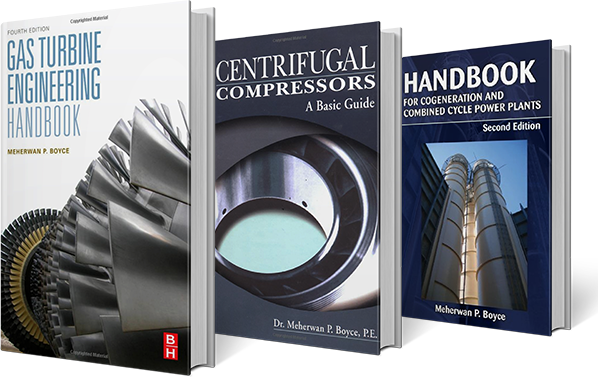
The Gas Turbine Engineering Handbook has been the standard for engineers involved in the design, selection, and operation of gas turbines for the past 24 years.
Read more..
Connect with us
November 22 – 24, 2011
London U.K.
Attend this 3-day power session for a comprehensive introduction to the practical optimization, operation, and design considerations of combined cycle power plants. The course delves deep into the "why" and "how" of gas and steam turbines and teaches how to minimize operating costs and maximize efficiency, reliability, and longevity.
Taught by one of the world’s leading experts in Gas Turbine Engines, Professor Meherwan P. Boyce, P.E. (US), Chartered Engineer (UK), this event will show you how to:
The Institution of Diesel and Gas Turbine Engineers has assessed and certifies that the Advanced Technology Gas Turbines and Planned Optimization of Combined Cycle Power Plants engineering training course meets the requirements necessary to contribute towards the Continual Professional Development requirements of registered engineers and engineering technicians.
Engineers of all disciplines, managers, technicians, design, maintenance and operations personnel, and other technical individuals who need a comprehensive overview of practical optimization, operation and design considerations of a major combined cycle power plant.
The course deals with the design and general operation and maintenance characteristics of gas and steam turbines in a combined cycle power plant with emphasis on the major plant components, and the performance of the plant. Overall design and operation concepts along with basic operation and maintenance problems for the various pieces of TurboMachinery (gas turbines, steam turbines, and boiler feed water pumps) are discussed. Discussions and design parameters of the Heat Recovery and Steam Generating (HRSG) systems, the feed water heaters and the condensers are also included.
Planned Optimization of the Combined Cycle Plant, for maximum efficiency and power is emphasized throughout the course. Cycle efficiency and part load characteristics are discussed in depth.
An emphasis is placed on providing practical information with minimal theory. This part of the course is aimed at engineers and operational personnel who need a broad-based introduction to practical optimization, operation and design considerations of a major combined cycle power plant. Discussion throughout the course especially of plant problems and optimization by the participants with the instructor and amongst themselves is encouraged so as to maximize the course experience.Overview of Combined Cycle Power Plants
Various types and sizes of combined cycle power plants used in the power and petrochemical industry are discussed. Operation characteristics of the plants to operate at part load while maximizing efficiency is emphasized both for combined cycle applications and petrochemical compressor drives.
Performance and Mechanical Equipment Standards
The ASME and API standards applicable to the various pieces of Machinery will be discussed
Cycle Analysis and Power Augmentation
Analysis of various types of cycles including intercooled, reheat and regeneration cycles, combined cycles, cogeneration cycles and optimization of the cycle based on the performance of the various components will be discussed.
Power Augmentation
Power augmentation and increasing cycle efficiency are studied, such as inlet evaporative and refrigeration cooling, interstage cooling, water and steam injection. State of the art developments in gas turbine technology are reviewed, especially the characteristics of operating gas turbines over a large operating range while maximizing the performance of the entire system.
Maintaining high efficiency at part load operations is a challenge and thus this will include the examination of techniques which will allow the gas turbines at off design loads to operate at its maximum, within the entire plant system ensuring high operating efficiency of all components.
Advanced Gas Turbine Characteristics
This day is devoted to the examination of design changes in Advanced Gas Turbines, from changes in cycle characteristics, to changes in design characteristics of compressor and turbine blading, high inlet temperatures, increased pressure ratios, new DLN combustors for low NOx characteristics.
Axial Flow Compressors and Turbines
Key aero-thermodynamic considerations of axial and centrifugal compressors are covered including the effect of surge on gas turbine operation. This section also covers mechanical, performance and aerodynamic aspects of gas turbines, including new cooling schemes for gas turbines to operate at turbine inlet temperatures of 1350ºC -1450ºC.
Combustors and Fuels
A description of combustor types, chamber design, fuel atomization, ignition and combustor arrangements are presented. Dry low NOx combustors and their problems with “Flash Back” will be discussed. Fuel treatment of natural gas and other fuels before using them in the gas turbine will be studied, to ensure that the turbine combustion will meet specifications covering emissions and ensuring maximum combustion liner life.
Materials Metallurgy and Coatings
This covers the material aspects of gas turbine blading, turbine wheel alloys, and future materials are discussed. Common failure modes and cases are presented. Coatings as applied to both the Hot Section Components and the compressor will also be discussed under this section.
Steam Turbine Technology
The design of the steam turbines will be undertaken in this section. The design of the high pressure turbine, which is usually an impulse turbine, will be discussed and the IP and LP turbines, which are usually reaction turbines, will also be studied separately
HRSG Technology
The study of the HRSG will be undertaken in conjunction with the feed water heaters, dearators, and economizers, plus the preheaters, evaporators, and superheaters of each stage. A study of the temperature distribution as a function of the heat input is also studied with various optimization techniques to assure maximum effectiveness of the HRSG.
Condensers
A study of the condensers and the computation of the degree of fouling will be examined. The study will include techniques of computing the fouling in the tubes and the quality of the steam entering the unit. The effect of the fouling on the condenser pressure and the effect of that pressure on the entire power output of the plant.
Feed Water Pumps
The design characteristic of the feed water pumps will be undertaken. Most of these pumps have centrifugal impellers and so a study of the flow in these impellers will be conducted and the performance characteristics of these pumps will be studied.
Instrumentation and Condition Monitoring
An overview of techniques and instrumentation used for monitoring and diagnostics of gas turbines is presented. Techniques covering diagnostics based on performance and mechanical characteristics will be discussed. Systems for gas turbines will be analyzed.
Combined Cycle Plant Performance
Discussion of performance computations as per various ASME PTC Codes. Techniques for computing performance of the advanced gas turbines in design and off design operation and in combined cycle modes will be studied. Most new advanced gas turbines operate at very high turbine firing temperatures. Thus variation in this firing temperature significantly affects the performance and life of the components in the hot section of the turbine. The compressor pressure ratio is high which leads to a very narrow operation margin, thus making the turbine very susceptible to compressor fouling. The turbine is also very sensitive to backpressure exerted on it by the heat recovery steam generator. The pressure drop through the air filter and dirty compressors also results in major deterioration of the performance of the turbine, thus emphasis will be placed on this computation.
Maintenance and Case Histories of Combined Cycle Power Plants
Maintenance Techniques are discussed in detail and analysis in determining and diagnosing problems in the plant. A matrix of gas turbine problems and diagnostics in gas turbine compressors, combustors, and turbines are given and discussed. A matrix also has been provided and will be discussed for diagnosing and determining vibration based problems in all Turbomachines
A new Chapter has been introduced in the Second Edition of “The Handbook for Cogeneration and Combined Cycle Power Plants”, Chapter 15, “Case Histories of Problems Encountered in Cogeneration and Combined Cycle Power Plants”. This is an extensive treatise on the many problems associated with the Combined Cycle Power Plants and some of the solutions that have achieved higher efficiencies and reliability. This chapter explains in depth the problems encountered and with 145 figures fully illustrates the many failures encountered in Cogeneration and Combined Cycle Power Plant applications.
| 9:00 -10:30 | 10:30-10:45 | 10:45-12:00 | 12:00-1:30 | 1:30-3:15 | 3:15-3:30 | 3:30-5:00 | |
TUESDAY |
Overview of Combined Cycle Power Plants and Standards |
Coffee Break |
Cycles |
Lunch |
Advanced Gas Turbines |
Coffee Break |
Axial Flow Compressors and |
WEDNESDAY |
Combustion |
Coffee Break |
Steam Turbine |
Lunch |
Heat Recovery Steam Generator |
Coffee Break |
Condenser and Feed Water Pumps |
THURSDAY |
Instrumentation |
Coffee Break |
Test Codes |
Lunch |
Maintenance |
|
|
Professor Meherwan P. Boyce, PhD., P.E. (USA), C.Eng. (UK), Fellow ASME (USA), IMechE (UK), & IDGTE (UK) is CEO of The Boyce Consultancy Group, LLC. He has over 45 years of experience in the power sector in both industry and academia. His industrial experience includes 30 years of power sector design and service as CEO of a power industry engineering firm which he founded. His 15 years in academia included the position of Professor of Mechanical Engineering at Texas A&M University. He is the author of over 150 technical articles and the sole author of several books such as the Gas Turbine Engineering Handbook (Elsevier), Cogeneration & Combined Cycle Power Plants (ASME Press), and Centrifugal Compressors, A Basic Guide (PennWell Books). Professor Boyce is also a contributor to several Handbooks; his latest contribution is to the Perry’s Chemical Engineering Handbook Seventh and Eight Editions (McGraw Hill) in the areas of Transport and Storage of Fluids, and Gas Turbines.
Dr. Boyce has taught over 150 short courses attended by over 3000 students representing over 300 Corporations, and has served as an expert witness in many power sector lawsuits and arbitrations. He is a Consultant to the Aerospace, Petrochemical and Utility Industries globally, and is a much-requested speaker at Universities and Conferences throughout the world.
To learn more about Dr. Boyce’s in-depth experience in mechanical engineering and consulting, awards won, books authored, patents secured, and publications contributed to, visit the Dr. Boyce Biography section of the website.
The Milestone Hotel
1 Kensington Court, London W8 5DL
T: +44 (0)20 7917 1041
F: +44 (0)20 7917 1133
website
A special accommodation rate has been negotiated for attendees:
Superior Queen Room = £250.00 per room, per night, exclusive of VAT @ 20%, room only
This rate includes:
To make your reservation, contact bookms@rchmail.com.
Please click here to register online.
Seats are limited. Register early to ensure participation.
Three Day Course: £2,999
Early Bird Registration: £2749 before October 15, 2011
Registration fee must be paid in full by the early bird deadline to take advantage of discounted pricing.
Multiple registrations from one company enjoy a 10% discount. Register your entire time and save!
All attendees are required to check-in at the Registration Desk between 8:00 a.m. – 9:00 a.m. on the first day of the course.
Classes begin promptly. Please arrive early as a courtesy to other participants. The breakdown of hours for each day is as follows:
| Tuesday | 9:00 a.m. – 5:00 p.m. |
| Wednesday | 9:00 a.m. – 5:00 p.m. |
| Thursday | 9:00 a.m. – 3:30 p.m. |
Due to limited space, limited registration is available and it is suggested you register early to ensure participation. An attendee will not be considered as registered unless his fees are paid in full. A refund, less 15% administration charge, will be made if cancellation is received in writing 10 business days before the start of the course. Substitutions may be made at any time. We are happy to hold a rain check credit towards a future course.

This course is one of the best to have a clear understanding on the performance of Centrifugal Compressors and Gas Turbines.
Gui Hun Seol
Hyundai Heavy Industries, South Korea
Excellent, informative, speaker with a huge depth of knowledge.
Sandra Barry
Sasol Technology, South Africa
The personal experience and well recognized knowledge of Dr. Boyce make this course worth doing.
Manuel de la Sota
CEPSA, Huelva Spain
The course material is highly appropriate. The wealth of knowledge that Dr. Boyce brings to the course makes it actionable.
Ryan Brown
Southern Company, Birmingham, Alabama
The course covers all the fundamental engineering necessary to understand compressors and turbines.
Kevin Robinson
EPCO, Inc., Mont Belvieu, Texas
I strongly recommend this course; you can see new designs and refresh case studies and performance computation for combined cycle power plants.
José Ortiz
PDVSA Venezuela
I like his style and his consummate command of the subject lifetime of expertise that he still devotes to students.
Tim McConnell
Dept. of Law Civil Division (RAPA) AG Anchorage, Alaska, U.S.A.
This was an excellent course! My requirement was that I get up to speed on combined cycle technology, applications and performance calculations. The program far exceeded my expectations.
Douglas Deay
New York Independent System Operator, Rensselaer, New York, U.S.A.